
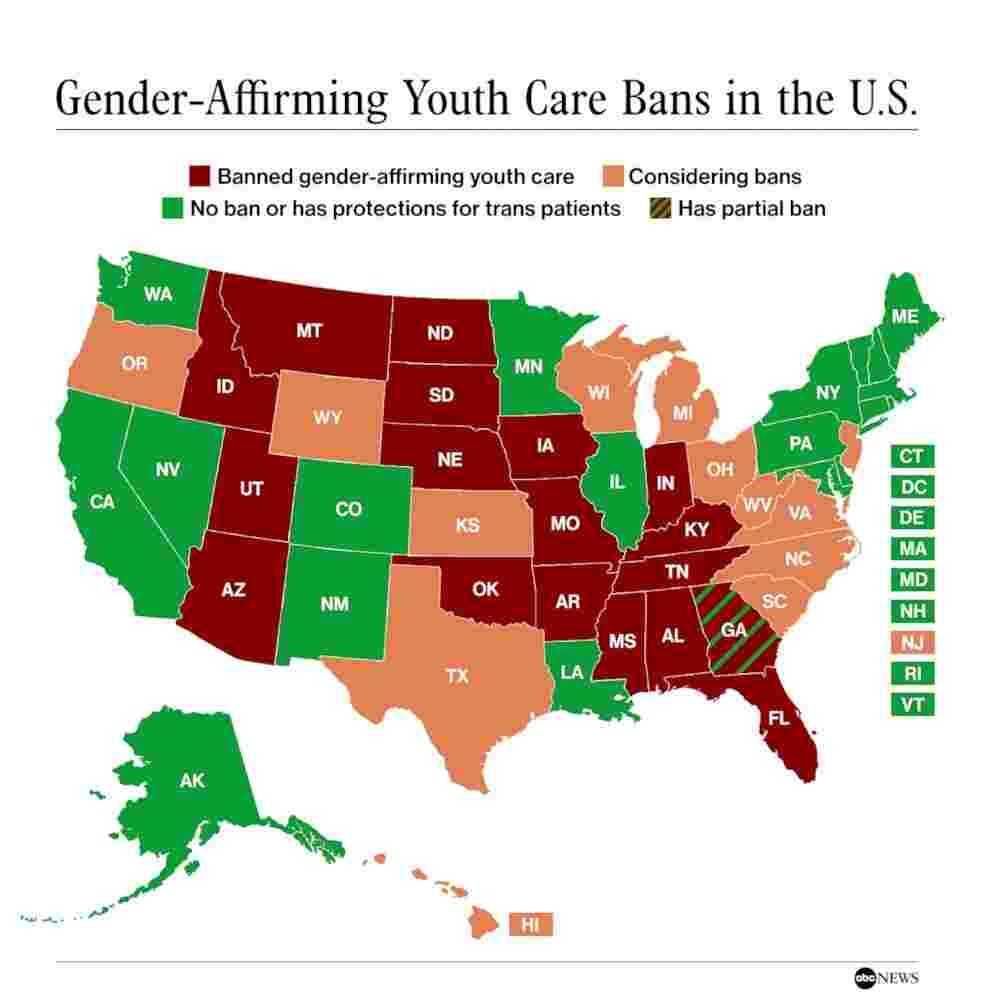
A major legal battle is unfolding in the United States after a coalition of Democratic-led states filed a lawsuit challenging recent federal policy changes that scale back protections for children’s gender-affirming healthcare. The case has quickly become one of the most closely watched health policy disputes in the country, carrying significant implications for medical providers, families, and state-level healthcare systems.
The lawsuit targets a new federal directive that limits funding and regulatory support for gender-affirming care for minors, including access to puberty blockers, hormone therapy, and specialized mental health services. State attorneys general argue that the policy undermines established medical standards and places vulnerable children at risk by restricting access to care recommended by major medical organizations.
States Push Back Against Federal Policy Shift
The legal action is being led by a group of Democratic states that contend the federal government exceeded its authority by altering healthcare protections without sufficient medical or scientific justification. According to the states, the policy creates confusion for hospitals and clinicians while disrupting care for thousands of families who rely on consistent medical guidance.
Attorneys general from multiple states stated that healthcare decisions should be guided by doctors and families, not political directives. They argue that the cuts interfere with state-run healthcare programs and violate existing protections designed to ensure equal access to medically necessary treatment.
Impact on Families and Healthcare Providers
Healthcare providers warn that the policy shift could force clinics to reduce or eliminate services for transgender and gender-diverse youth. Many hospitals and pediatric specialists have already expressed concern that the changes may discourage providers from offering care due to fear of funding losses or regulatory penalties.
Families affected by the changes say the uncertainty has been deeply distressing. Parents report delays in treatment, canceled appointments, and difficulty finding qualified providers as clinics reassess their legal and financial exposure. For children receiving ongoing care, even short interruptions can have lasting physical and psychological consequences, according to medical experts.
Medical Community Raises Concerns
Major medical associations have reiterated their support for evidence-based gender-affirming care, emphasizing that such treatments are widely recognized as beneficial for appropriately evaluated patients. Doctors argue that the federal policy disregards decades of clinical research and consensus-driven guidelines.
Public health specialists also warn that restricting access to care may worsen mental health outcomes among transgender youth, a group already facing elevated risks of anxiety, depression, and self-harm. They stress that access to comprehensive healthcare is a critical protective factor.
Federal Government Defends Policy
Federal officials have defended the policy change, stating that it is intended to ensure greater oversight and uniform standards across the healthcare system. Supporters of the move argue that decisions involving minors require additional scrutiny and that states should not rely solely on federal guidance for such care.
However, critics say the justification lacks clarity and fails to address how the policy aligns with existing civil rights and healthcare laws. The lawsuit seeks an injunction to block enforcement while the courts review whether the federal government acted lawfully.
Broader Political and Legal Implications
The case reflects a growing divide between state and federal approaches to healthcare policy, particularly on socially and politically sensitive issues. Legal experts note that the outcome could set a precedent for how far the federal government can go in shaping access to specific medical treatments.
If the states succeed, it could reaffirm state authority over healthcare delivery and limit future federal rollbacks. If the federal government prevails, similar policies could expand nationwide, reshaping access to care across multiple states.
What Happens Next
The court is expected to consider emergency motions in the coming weeks, with potential implications for healthcare providers and families before a full ruling is issued. As the case progresses, hospitals, insurers, and state agencies are preparing for multiple outcomes.
The lawsuit underscores how deeply healthcare policy has become intertwined with legal and political battles in the U.S. For families affected by the changes, the case represents more than a legal dispute—it is a fight over access, stability, and the role of medical science in shaping public health decisions.